
Imagine a world where no child goes to sleep hungry, where farmers have the knowledge to protect every harvest, and where food reaches the people who need it before hunger becomes a crisis. This future may seem distant, but the technology to help build it is already here.
Artificial intelligence is transforming the way we understand the world. It can analyze enormous amounts of information, recognize patterns, predict disasters, monitor crops, strengthen food supply chains, and help humanitarian organizations respond to emergencies in ways that were once impossible. Yet the true power of AI will not be measured by how intelligent our machines become. It will be measured by what we choose to do with that intelligence.
Hunger is not simply a problem of food. It is a problem of access, distribution, poverty, climate, conflict, and unequal opportunity. AI cannot solve these challenges alone, but it can give humanity a powerful new set of tools to confront them. When technology is guided by human judgment, ethical standards, and a commitment to fairness, data can become action, and action can become change.
The question before us is no longer whether artificial intelligence can help fight hunger. The question is whether we will have the vision and responsibility to govern it wisely.
If we can teach machines to recognize patterns, predict disasters, and optimize the movement of food, then we can also build systems that put human life at the center of every decision.
Zero Hunger is not a dream that belongs to the future. It is a responsibility we have today. AI can give us the tools to move closer to that future, but it is humanity that must decide where those tools lead us.
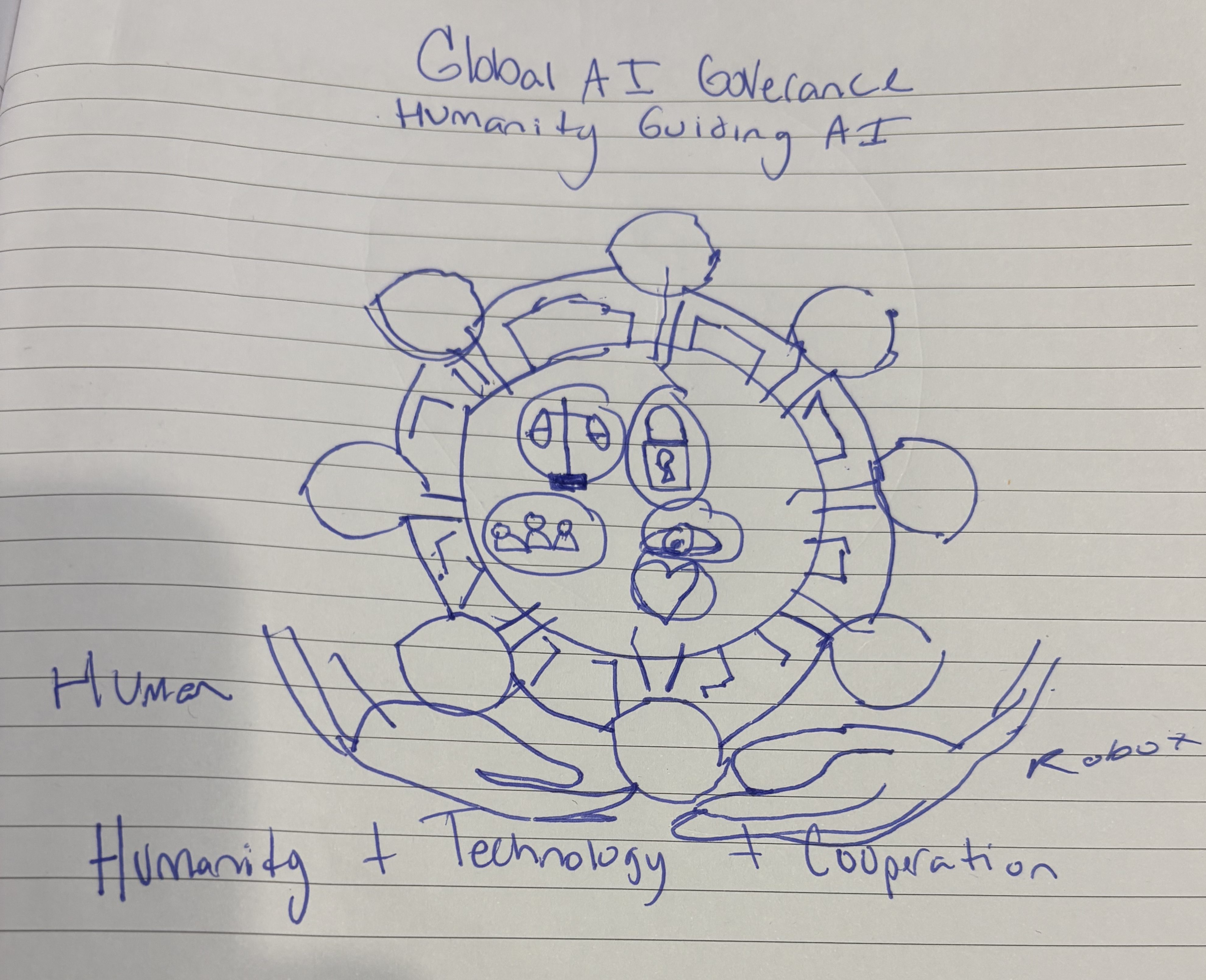
Humanity Guiding AI (Small human figures representing different countries)
Humans Are Responsible for Guiding Technology
Humans are responsible for guiding technology because we are the ones who create it, control how it is used, and decide what role it should have in our lives. Technology can make everyday tasks easier, improve communication, and help solve important problems, but it can also create risks when it is used irresponsibly. For this reason, people must make thoughtful and ethical decisions about how technology is developed and used.
As technology continues to advance, humans should consider its effects on individuals, communities, and society as a whole. Developers, businesses, governments, and everyday users all have a responsibility to use technology in ways that are safe, fair, and beneficial. Technology should support human needs rather than replace human responsibility and judgment.
Ultimately, technology is a tool, and its impact depends on the choices people make. Humans must remain responsible for guiding technology and ensuring that innovation is used to improve people’s lives while minimizing potential harm.
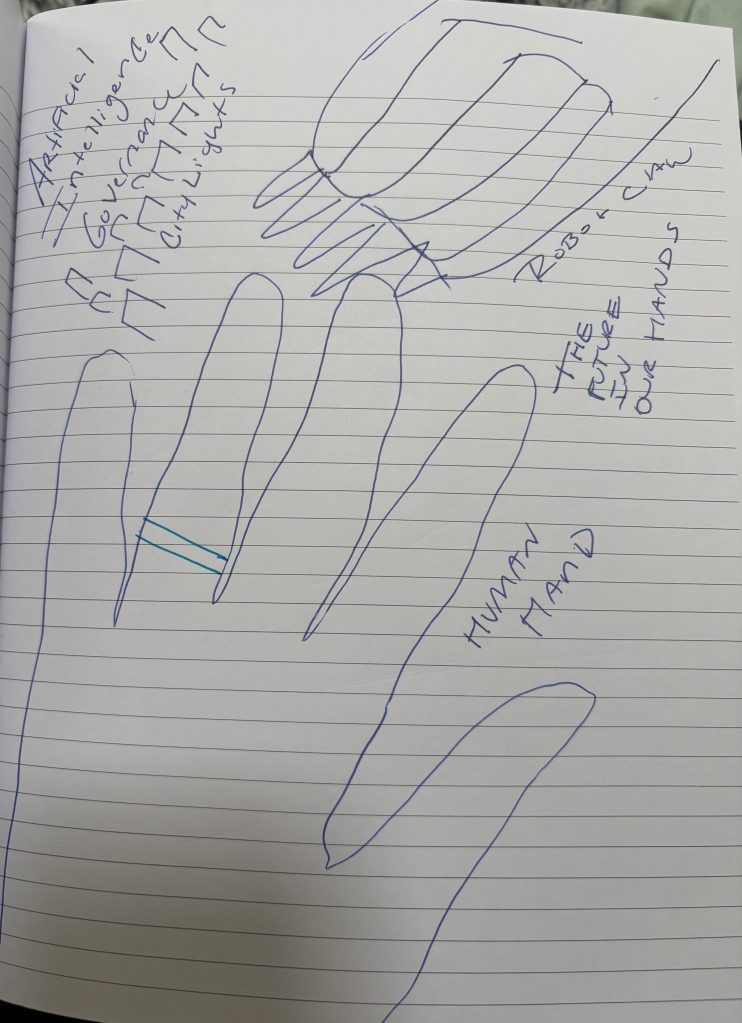
Humanity Around AI
My poster shows a human and a robot holding hands while standing in front of a city filled with people and lights. The human and robot represent cooperation between humanity and artificial intelligence rather than technology replacing people. The bright city represents society, progress, and the future that will be influenced by AI. My message is that humans have a responsibility to guide AI so that technology develops in ways that benefit people and communities. The human and robot holding hands represent cooperation between people and technology. The robot is not replacing the human; instead, they are working together.
“Robots, People, and a World Without Hunger”
WE ONLY GET ONE LIFE.
NO ONE SHOULD HAVE TO LIVE IT HUNGRY.
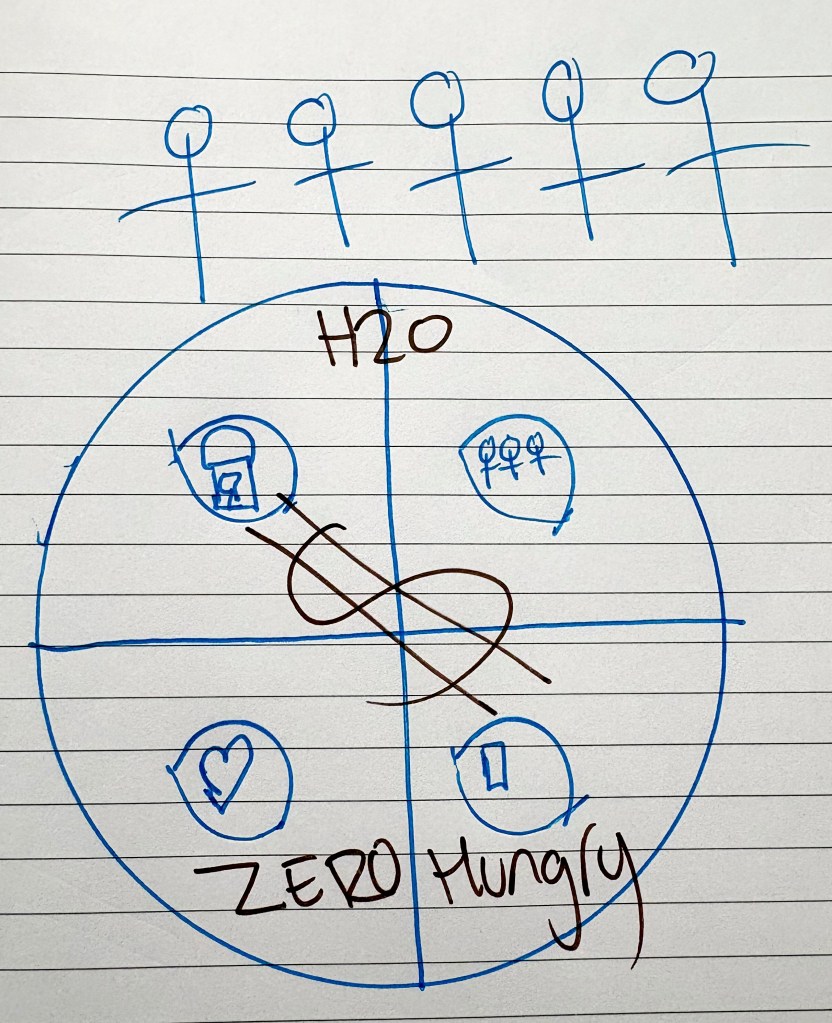
This sketch represents the idea of using AI and robotics to help humanity create a better and more sustainable world. The large circle represents the global community, while the robot and human holding hands in the center symbolize cooperation between people and artificial intelligence. The people around the circle represent humanity working together, while the symbols represent technology, cooperation, ethics, and compassion. The heart represents care for others and human well-being. The words “Zero Hunger” connect the design to the goal of using AI and innovation to help provide food and improve lives around the world. Overall, the sketch shows that AI should work with humans to solve global problems while keeping human values, responsibility, and compassion at the center. The people at the top represent humanity coming together. The “H2O” in the center can represent life and the importance of protecting human life and the environment.
Overall, the sketch communicates the idea that AI should work with humans and be guided by human values, cooperation, ethics, and responsibility.
AI and Humanity Working Together for a Better Future
This sketch represents a future where technology is guided by human values. The human and robot holding hands symbolize cooperation rather than separation, showing that AI can be a tool to help people address real-world challenges. The circle of people represents a connected global community, while the heart represents compassion, responsibility, and care for human life. “Zero Hunger” gives the design a meaningful purpose: using innovation to help create a world where basic needs are met. Ultimately, the sketch shows that the greatest potential of AI isn’t simply what machines can do, but what humans and technology can accomplish together.
“AI for Zero Hunger: Humanity Guiding Technology Toward a Sustainable Future”
AI is not the goal itself. The goal is to use technology responsibly to help people live better lives, including ensuring they have access to food.
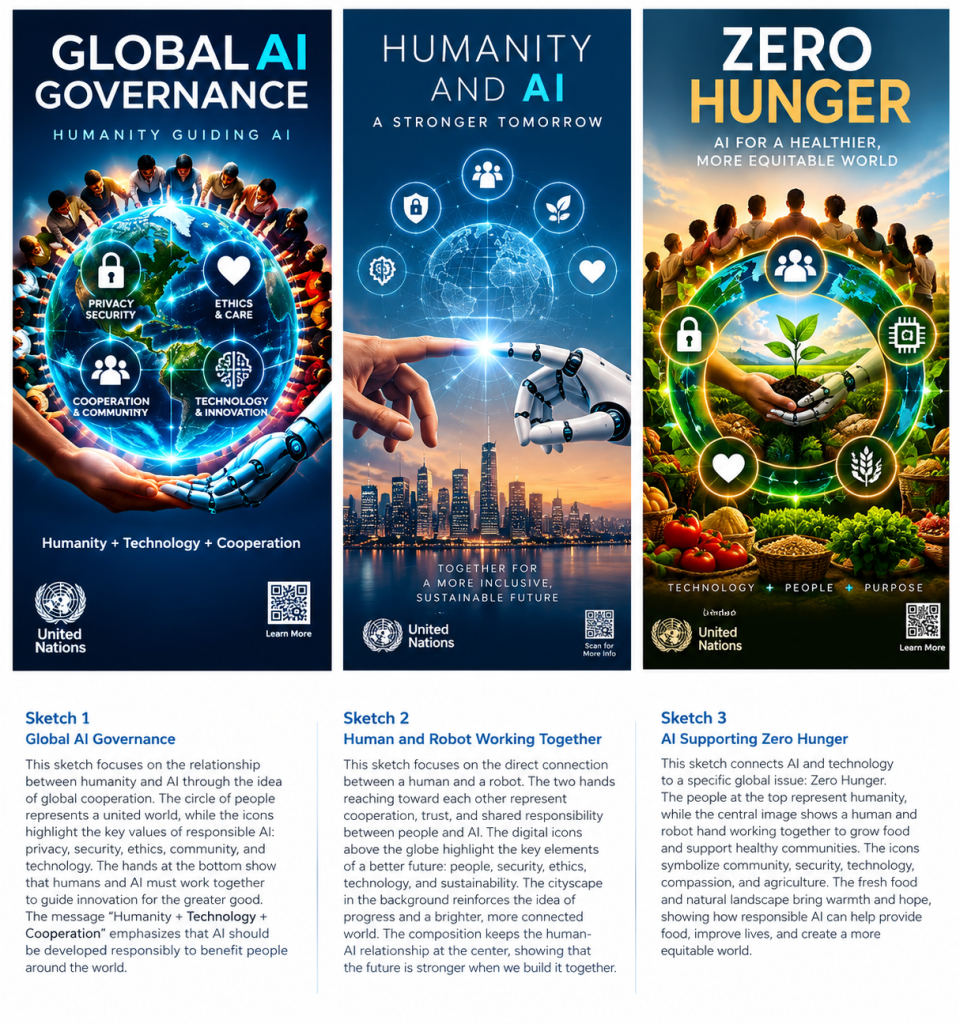
Sketch 1 – Global AI Governance
This sketch focuses on the relationship between humanity and AI through the idea of global cooperation. The central circle represents the world, with people surrounding AI-related symbols for technology, security, ethics, and community. The hands supporting the design represent humans guiding and working with technology. The message “Humanity + Technology + Cooperation” emphasizes that AI should be developed responsibly to benefit people around the world.
Sketch 2 – Human and Robot Working Together
This sketch focuses on the direct connection between a human and a robot. The two hands reaching toward each other represent cooperation, trust, and shared responsibility between people and AI. The digital elements above the hands represent technology and global communication. The composition is designed to make the relationship between humans and AI the main visual focus.
Sketch 3 – AI Supporting Zero Hunger
This sketch connects AI and technology to a specific global issue: Zero Hunger. The people at the top represent humanity, while the central human-and-robot interaction represents technology working with people to solve problems. The symbols inside the circle represent community, security, technology, and compassion, while “Zero Hunger” gives the poster a clear social purpose. The overall message is that responsible AI can be guided by human values to help improve lives and address global challenges.
UN LOGO
The United Nations logo was designed in 1945 by a team led by Oliver Lincoln Lundquist. It features a world map surrounded by olive branches, symbolizing peace and unity among nations.